Let’s be clear from the start: this isn’t a resume stuffed into a webpage. A portfolio, my portfolio, is something different. It’s a story. It’s the proof in the pudding, the “how” behind the “claimed.” You can list “strategic thinker” on a LinkedIn profile all day long. But here, I want to show you the time I walked into a company bleeding customers and, within a year, helped build a community so strong it became their primary revenue stream. That’s the difference.
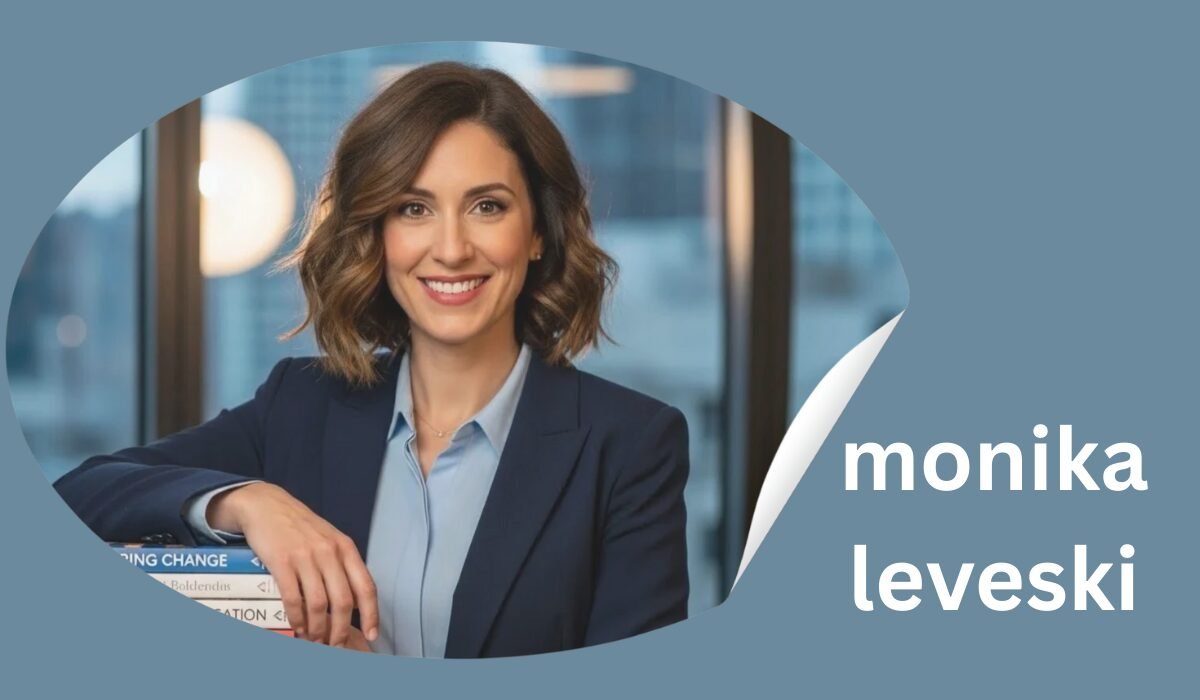
I’m Monika Leveski. For the last twelve years, I’ve operated in the fascinating, messy, and ultimately human space where technology meets need, where design meets emotion, and where strategy meets the ground. I’ve been called a Product Lead, a UX Strategist, a Digital Alchemist. The title matters less than the consistent thread: I listen to the chaos, find the signal, and build a path forward.
This portfolio is a curated walk through that process. We’ll talk skills, sure. But we’ll anchor every one of them in a real project with real constraints, real team dynamics, and real results. Consider this your backstage pass.
Part I: The Engine Room – Core Experiences & Philosophy
My career has been less of a straight ladder and more of a spiral staircase. Each revolution takes me higher, but I pass the same core perspectives—user empathy, technical feasibility, business viability—with a deeper understanding each time.
My Guiding Principles:
-
The Problem is the North Star: We don’t worship solutions. We worship deeply understood problems. A feature no one uses is a crime against time and resources.
-
Elegance is Efficiency: The simplest, clearest path for the user is almost always the most efficient and cost-effective to build and maintain. Complexity is a debt.
-
Words are Interface: Microcopy is a superpower. A button that says “Proceed” is inert. A button that says “Get your custom plan” is a promise.
-
Lead from the Workshop, Not the Mountaintop: The best ideas are forged in collaboration with engineers, marketers, and support agents. My job is to facilitate that forge.
Key Career Chapters:
-
The Agency Years (Years 1-4): My bootcamp. I worked at a fast-paced digital agency, juggling 5-7 client projects at a time. This is where I learned velocity, how to extract insight from stakeholders who don’t speak “design,” and the art of the Minimum Lovable Product. I left because I craved deeper impact.
-
In-House Product Lead (Years 5-9): I joined Veridian Solutions, a B2B SaaS company in the logistics space. Their product was powerful but had a 42% churn rate after the first year. I went from “hired to redesign the dashboard” to leading a full product-culture transformation. This is where I cut my teeth on data-informed design, managing cross-functional teams, and the long game of product strategy.
-
Independent Consulting & Focused Projects (Years 10-Present): Armed with operational experience, I stepped out to help a select few companies tackle specific, gnarly challenges. This has ranged from 6-month embedded roles to advising startups on product-market fit. It keeps my skills sharp and my perspective fresh.
Part II: The Toolkit – Skills, Frameworks & Languages
This is the “how.” I believe skills are verbs, not nouns.
Discovery & Strategy:
-
Facilitation: Running workshops that feel like productive conversations, not torture sessions. From “How Might We” sprints with leadership to user journey mapping with front-line staff.
-
Qualitative Research: Conducting user interviews that go beyond “do you like this button?” to uncover latent needs and unspoken frustrations. I’ve interviewed everyone from frantic hospital administrators to meticulous financial auditors.
-
Quantitative Analysis: Comfortable diving into tools like Mixpanel, Pendo, or good old-fashioned Google Analytics to find the “what” that complements the “why.” I speak SQL enough to be dangerous and to have a meaningful conversation with a data analyst.
-
Jobs-to-be-Done (JTBD) Framework: My primary lens for understanding user motivation. It forces clarity: what is the fundamental progress a user is trying to make in a given situation?
Design & Execution:
-
Systems Thinking: I don’t just design screens; I design interconnected systems. A change in the onboarding flow has implications for support documentation and billing. I map those connections.
-
Interaction & UI Design: Proficiency in Figma is a given. My focus is on crafting intuitive, accessible interfaces that reduce cognitive load. I maintain a robust component library mindset.
-
Prototyping: From quick, scrappy Figma prototypes to test a flow concept, to more high-fidelity, interactive prototypes used for usability testing and developer handoff.
-
Technical Dialogue: I am not an engineer. But I have a profound respect for the craft. I understand architectural constraints, can discuss APIs in basic terms, and know the difference between a quick front-end fix and a back-end refactor. This empathy prevents fantasy and builds trust.
Leadership & Communication:
-
Storytelling with Data: Turning metrics, user quotes, and business goals into a compelling narrative that aligns stakeholders. A good roadmap tells a story of the future.
-
Stakeholder Management: Navigating the sometimes-competing priorities of sales, marketing, engineering, and executive leadership. Transparency and clear trade-off communication are key.
-
Mentorship: I actively enjoy teaching. I’ve mentored junior designers and product managers, focusing on critical thinking over tool proficiency.
Part III: The Proof – Project Deep Dives
Here’s where we get into it. These are not side projects; these are core chapters of my professional story.
Project 1: The Retention Overhaul @ Veridian Solutions
-
The Problem: A powerful logistics SaaS tool was seeing customers sign up, implement, then leave after 10-14 months. Sales were strong, but growth was a leaky bucket.
-
My Role: Initially hired as a Senior UX Designer, I championed a deep-dive investigation that evolved into me leading a “Retention Taskforce.”
-
The Process:
-
Listening Tour: I spent two weeks not looking at the product. I interviewed 15 churned customers, sat with the customer support team, and listened to sales calls. The key insight wasn’t about features; it was about loneliness. Customers felt abandoned after implementation, faced with a complex tool and no sense of community or shared best practices.
-
Reframing the Problem: We shifted from “How do we make the UI better?” to “How do we make our customers feel like successful, connected insiders?”
-
The Pivot: I proposed a bold, 18-month strategy to build a customer community into the product. This wasn’t just a forum. It was a integrated system:
-
“Crewmate” Program: A peer-to-peer mentorship onboarding path, built into the dashboard.
-
Verified Tips & Templates: A user-generated library of workflow templates (e.g., “Best Customs Form Setup for Canada”), vetted by our team, accessible with one click inside relevant parts of the software.
-
Live Logistics Pulse: A simple, visual dashboard within the app showing aggregate, anonymized industry data from all customers (e.g., “Port of LA delays are averaging 3 days this week”).
-
-
-
The Outcome: We launched the first phase in 9 months. Within a year, churn decreased by 28%. Customer Satisfaction (CSAT) scores shot up. The community became a lead generation tool, as prospects heard about it. I didn’t just redesign screens; I helped redesign the company’s relationship with its users.
Project 2: “Find Your Floor” – A Healthcare Wayfinding App
-
The Problem: A major regional hospital network found that patient and visitor stress was spiking, and staff were constantly diverted from medical tasks to give directions. Their physical signage was a maze.
-
My Role: Independent Consultant & Project Lead.
-
The Process:
-
Ethnographic Shadowing: I spent days in the hospital lobbies, watching people. I saw the panicked eyes, the crumpled maps, the families arguing. I also interviewed nurses, security guards, and volunteers.
-
Constraint Acceptance: This wasn’t a greenfield app. It had to work on older people’s phones, in areas with spotty cellular signal (thick hospital walls), and comply with strict HIPAA privacy rules. No fancy AR. No complex login.
-
The Elegant Solution: We built “Find Your Floor,” a progressive web app (so no download needed). The core interaction was dead simple:
-
Step 1: Scan a unique QR code posted at every main entrance. (This solved the “I have no signal” problem—the QR code pre-loaded the map data).
-
Step 2: Tap “I need to find…” and choose from large-type buttons: Emergency Dept, Patient Room [Number], Radiology, Cafeteria, Bathroom.
-
Step 3: Follow a color-coded line and simple text instructions: “Take the Green Elevator to 4. Turn left. Room 412 is 20 feet ahead.”
-
-
Inclusive Design: We used high-contrast colors, voice-over compatibility, and languages based on hospital demographic data.
-
-
The Outcome: Pilot testing showed a 61% reduction in “wayfinding-related” queries to staff. Patient satisfaction scores for “ease of navigation” improved from 2.1/5 to 4.4/5. The hospital is now rolling it out network-wide. This project was a masterclass in solving a human problem with humble, robust technology.
Project 3: Bridging the Silo Gap – Internal Tools for a FinTech
-
The Problem: A scaling FinTech company had a critical disconnect. Their risk assessment team used a clunky, legacy internal tool. The sales team used a modern CRM. Data wasn’t syncing, leading to errors, delays, and internal blame games.
-
My Role: Embedded Product Strategist for a 6-month engagement.
-
The Process:
-
Identifying the Real User: The first step was recognizing that the “user” here was not one department, but the handshake between teams. I mapped the entire “client onboarding” workflow, from first sales contact to final risk approval.
-
Building a “Translation Layer”: Instead of a costly, full-platform rebuild, I designed a simple, single-dashboard “Command Center.” It pulled key, read-only data from the risk tool and displayed it contextually within the sales CRM interface via a custom integration. It also provided a clear, auditable form for sales to submit requests to risk.
-
Focus on Communication, Not Just Data: The key feature was a shared status log with preset, non-technical updates (“Awaiting Review,” “Additional Info Requested,” “Approved”). This eliminated the “black box” feeling.
-
-
The Outcome: The average client onboarding time decreased by 4 business days. Internal support tickets related to process confusion dropped by over 70%. Most importantly, the culture of blame between teams began to dissolve because the process was now transparent. This project proved that the most impactful UX is sometimes for the people inside your own company.
Part IV: What’s Next? Looking Forward
I’m energized by complex, human-centric problems. My ideal next chapter is in a leadership role—Director of Product, Head of UX—where I can shape not just products, but product culture. I’m particularly interested in domains where technology has a tangible impact on well-being: climate tech, education technology, responsible finance, or the future of healthcare.
I want to work with people who are curious, kind, and relentless in their pursuit of a better solution. If your company has a leaky bucket, a tangled process, or a bold vision that needs a clear path to reality, let’s talk.